

Canvas Print Size Guide: Choose the Perfect Dimensions for Your Art
Picture this: you’ve just picked a favorite family photo, maybe a candid snap of your kids blowing out birthday candles, and you’re itching to turn it into something that hangs proudly on the wall.
But as you stare at your screen, the endless list of dimensions—8×8, 12×18, 16×24—starts to feel overwhelming. Which size will actually do the picture justice without looking like a cramped thumbnail or a giant billboard?
That’s exactly why we put together this canvas print size guide. In the next few minutes, we’ll walk through the simple logic that lets you match any image to the perfect canvas, whether you’re gifting a spouse a romantic sunrise or giving parents a cherished holiday snapshot.
First, think about the space where the canvas will live. A cozy nook above a bedside table? A spacious living‑room wall that serves as the room’s focal point? The room’s scale is the silent hero that decides whether a 12×12 square feels intimate or lost.
Next, consider the image’s composition. If the subject is centered and the background is simple, you have more freedom to go bigger. If the picture is busy, a modest size keeps the details from competing with the frame.
And don’t forget viewing distance. As a rule of thumb, multiply the viewing distance (in feet) by 12 to get the ideal diagonal size in inches. So, if you usually sit about 5 feet away, a 60‑inch diagonal (roughly 30×40) works beautifully.
We also like to match the canvas size to the purpose of the gift. For a heartfelt anniversary, a classic 16×20 offers a balanced, timeless look. For a playful kids‑room mural, think bigger—maybe 24×36—to let the colors pop and fill the wall.
Still unsure? Grab a piece of paper, cut it to the dimensions you’re eyeing, and tape it to the wall. Walk around, sit down, and see if it feels right. If it feels off, adjust—this quick test saves you from a costly mistake.
TL;DR
Choosing the right canvas size can feel overwhelming, but our canvas print size guide breaks down space, composition, and viewing distance into actionable steps anyone can follow.
Grab a sheet of paper, tape it to your wall, and see if the dimensions feel right—no guesswork, just confidence before you order.
Understanding Canvas Print Sizes
When you finally settle on a photo, the next puzzle piece is the canvas size. It feels like a tiny decision, but the dimensions you pick change how the image lives in a room, how the story feels, and even how often you’ll get compliments.
Think about the wall you’re targeting. A narrow hallway above a console table? That space screams for a modest 8×10 or a sleek square 12×12 that won’t overwhelm. A large, open living‑room wall that already holds a sofa and a coffee table? You can dream bigger—30×40 or even 36×48—so the canvas becomes a focal point rather than a side note.
Now, picture the image itself. If the subject is a single portrait with a clean background, you have room to go bold. But if the photo is busy—lots of kids, pets, or intricate patterns—a smaller canvas lets the eye rest instead of racing across every detail.
Here’s a quick rule of thumb we love at heartful.gifts: multiply the typical viewing distance (in feet) by 12 to get the ideal diagonal size in inches. Sit about 6 feet from a bedroom wall? Aim for roughly a 72‑inch diagonal canvas (that’s about a 30×40). Sit 3 feet away, like at a kitchen table? A 36‑inch diagonal (12×12 or 16×20) feels just right.
But numbers only tell part of the story. Let’s walk through a mini‑scenario. Imagine you’re picking a gift for your spouse—a sunrise over the ocean. The bedroom is modest, and you usually stand about 4 feet away when you get up in the morning. Using the rule, you land at a 48‑inch diagonal—so a 20×30 canvas feels cozy yet impactful. You cut a piece of cardstock to those dimensions, tape it up, and step back. If it feels like the sunrise is spilling over the edge, you know you’ve nailed the size before you even click “order.”
And what about those odd‑shaped rooms? If you have a tall, narrow space between two windows, a vertical canvas (e.g., 12×24) can accentuate the height without crowding the width. Conversely, a wide, low wall loves a panoramic layout like 24×36.
We also see a lot of parents wrestling with kid‑art collages. The trick? Choose a size that matches the average height of the artwork, then add a little breathing room—think 2‑3 inches extra on each side. That way the canvas frames the chaos without it feeling cramped.
Below is a short video that walks through measuring your wall and visualizing canvas dimensions. It’s a quick visual cheat sheet you can pause and replay while you’re tape‑testing on the wall.
After you’ve got a size in mind, double‑check the resolution of your photo. A good rule is 150 dpi at the final print size for a sharp, vibrant canvas. If your image is 3000 × 2400 pixels, it comfortably fills a 20×16 canvas without looking pixelated.
Here’s a quick checklist you can print out:
- Measure the wall’s width and height.
- Determine your typical viewing distance.
- Apply the distance × 12 rule for diagonal size.
- Match the canvas orientation (portrait, landscape, square) to the image composition.
- Test with a paper cut‑out before ordering.
One final tip: don’t be afraid to step back and look at the space empty. Sometimes a wall looks bigger than it is, and a slightly smaller canvas actually creates a more balanced feel. Trust your gut—if it feels right, it probably is.
Remember, the right canvas size isn’t just about fitting a frame; it’s about turning a moment into a piece of art that lives with you every day.
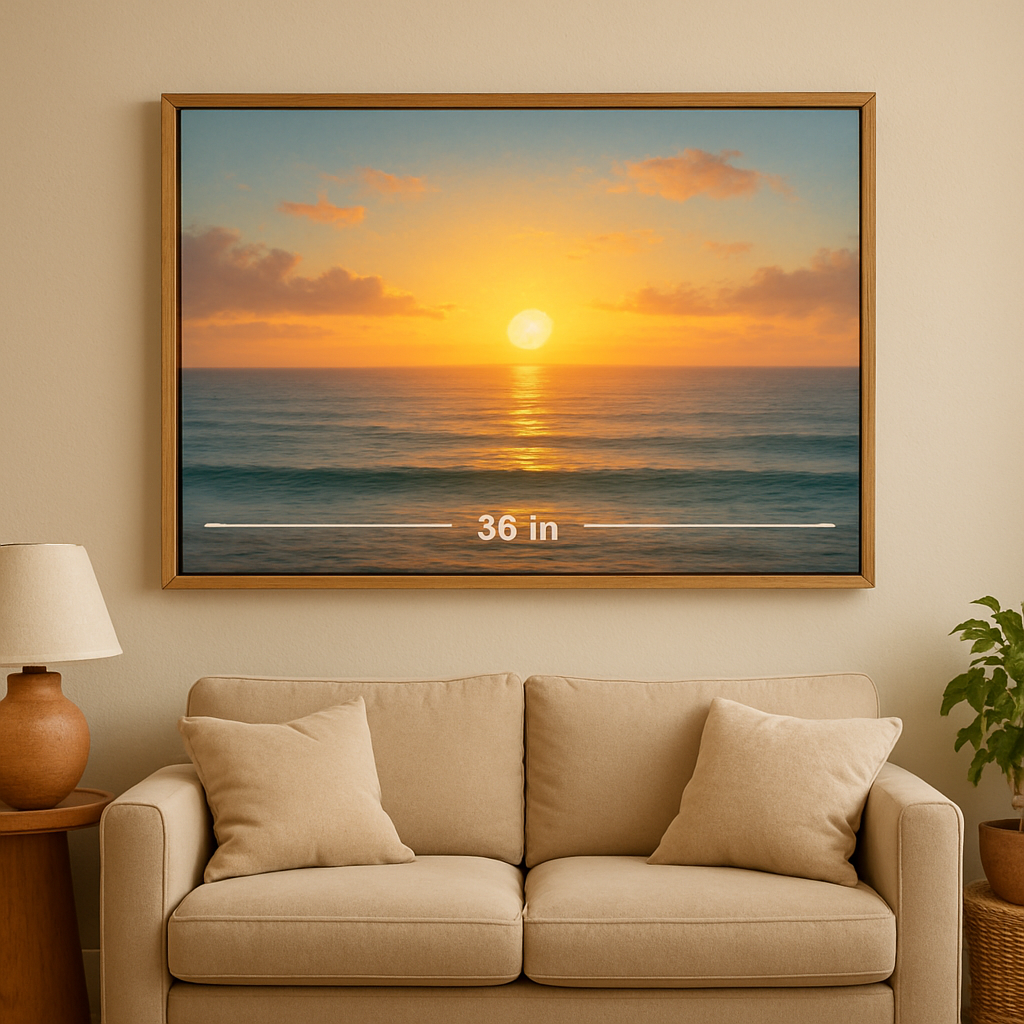
How to Choose the Right Canvas Size for Your Space
Ever stood in front of a blank wall and felt that tug‑of‑war between “maybe a tiny piece” and “let’s go massive”? You’re not alone – that moment is the emotional core of every canvas print size guide.
We’ve all been there: you’ve selected a gorgeous family photo, but the dimensions on the ordering page look like a cryptic code. The good news? You can turn that uncertainty into a quick, confident decision by breaking the process into three simple lenses – space, subject, and sightline.
1. Measure the wall, then the furniture
Start by measuring the width of the wall you want to fill. If the wall sits behind a sofa, couch, or headboard, note that piece’s width too. A classic rule of thumb is to let the canvas occupy roughly 40‑60 % of the furniture’s width. For an 84‑inch sofa, aim for a canvas between 34‑50 inches wide. That range keeps the artwork from looking lost or overpowering.
Next, consider the height. If the wall is 96 inches tall, you’ll typically want the center of the canvas about 58 inches from the floor – the gallery‑standard eye level. Add a 2‑4 inch buffer above the furniture to avoid a cramped feel.
2. Match the visual weight of the image
Dark, bold colors or intricate details “weigh” more than a light pastel sky. Heavy images need a larger format to breathe; airy scenes can shine in a modest frame. Imagine a dramatic sunrise over the mountains – you’d probably choose a 30 × 40 canvas to let the colors expand. Conversely, a simple black‑and‑white portrait of your toddler looks striking at 16 × 20.
In our experience, parents often gravitate toward a medium‑sized 20 × 30 canvas for a family portrait because it balances presence and intimacy without overwhelming a living‑room wall.
3. Calculate the ideal diagonal from viewing distance
Take the distance you usually sit from the wall (in feet) and multiply by 12. That gives you a ballpark diagonal in inches. Sitting five feet away? Target a 60‑inch diagonal – roughly a 30 × 40 canvas. If the piece will be viewed from across a larger room (say eight feet), bump up to a 72‑inch diagonal, such as a 36 × 48 canvas.
This rule keeps the image sharp enough that you don’t have to squint, while still feeling “just right” in the space.
4. Do a quick paper test
Grab a sheet of kraft paper, cut it to your calculated dimensions, and tape it to the wall. Walk around, sit down, and picture the final piece. Does it feel balanced? Does it draw your eye without stealing the spotlight from other décor? If something feels off, trim a few inches and retest. It’s a cheap, zero‑risk way to confirm your math.
For a visual walk‑through of this tape test, check out our guide on creating a stunning square photo canvas. The same principle works for any shape.
5. Real‑world examples
- Cozy bedroom nook: A 12 × 16 canvas above a nightstand adds personality without crowding the space. The viewing distance is just a few feet, so a 20‑inch diagonal works perfectly.
- Open‑plan living room: A 30 × 40 landscape from a recent vacation fills the central wall above the sofa. The room’s width is 120 inches, so the canvas sits at about 35 % of the wall – a sweet spot for impact.
- Dining‑room gallery wall: Combine three 16 × 20 pieces (a diptych plus a central portrait) to create a balanced cluster. Each piece follows the 1/3‑2/3 rule relative to the buffet table beneath.
6. Expert tip: consider the frame’s footprint
Floating frames and gallery‑wrap canvases add a few extra inches around the image. If you’re eyeing a 24 × 36 canvas with a floating frame, add 2‑3 inches to each side in your calculations so the final visual size stays within your target range.
And don’t forget the occasional “big‑picture” moment – sometimes a statement piece larger than the 2/3 rule can become a conversation starter, especially in a high‑ceiling loft.
7. Where to find inspiration
If you’re still debating size, browse through Society6’s wall‑art size guide for a broad overview of standard dimensions and how they play out in real rooms. For a more photography‑focused perspective, Nations Photo Lab outlines the “golden rule” of using 4/7 of furniture width – a handy cheat sheet you can print out.
Need a source of high‑quality portrait images to test your size calculations? high‑end portrait photography showcases images that look stunning on larger canvases. Or, if you love sweeping landscapes, inspirational landscape art can spark ideas for how a dramatic scene will fill a wall.
Bottom line: measure, match the visual weight, calculate the diagonal, test with paper, and adjust for framing. Follow these steps and you’ll walk away with a canvas that feels like it was made for the space, not forced onto it.
Standard vs Custom Sizes: Pros & Cons
So you’ve measured the wall, you’ve done the paper‑tape test, and now you’re staring at the size dropdown. Should you stick with a ready‑made dimension, or ask for a custom cut? That’s the heart of this comparison.
Let’s be honest: standard sizes are tempting because they’re cheap and quick. But they can feel like trying to fit a square peg into a round hole when your space is oddly shaped or your photo has a unique aspect ratio. Custom sizes, on the other hand, give you the freedom to match the wall exactly – but they often come with a higher price tag and a longer production timeline.
When Standard Sizes Shine
Picture a parent gifting a bedside canvas of a newborn’s first smile. A classic 16×20 fits nicely above a small nightstand, costs less, and ships in a day or two. Because the dimensions are pre‑set, the printing service can batch orders, which drives the price down.
Standard sizes also make framing a breeze. Most floating frames, gallery wraps, and wall‑mount kits are built for the most common dimensions – 8×10, 12×18, 16×20, 24×36. That means you won’t have to hunt for a specialty frame or pay extra for a custom mount.
And here’s a quick tip: if the image you love is landscape but the standard size you’re eyeing is portrait, consider cropping a bit or adding a subtle border. It’s a cheap way to keep the canvas within the standard range without sacrificing the core memory.
Why You Might Choose Custom Sizes
Now imagine a spouse who wants to showcase a panoramic beach sunset that stretches the entire length of a living‑room wall. A standard 24×36 would leave a lot of empty space, breaking the visual flow. A custom 30×72 canvas fills the wall, makes the scene immersive, and turns the room into a mini‑vacation.
Custom sizes also rescue awkward spaces. Think of a narrow hallway between two bookshelves – a 12×48 strip canvas can act like a gallery wall without crowding the passage. For gift buyers, offering a canvas that fits “just right” feels personal, like you’ve measured the room yourself.
From a quality standpoint, custom canvases let you preserve the original aspect ratio of the photo. No forced cropping, no awkward white borders. The result is a true‑to‑life representation that honors the memory.
Balancing Cost and Convenience
Standard sizes usually cost 15‑30 % less because the printer can use pre‑cut material and standard packaging. Custom sizes often add a premium for the extra material, unique cutting, and sometimes a bespoke frame or mounting option.
Turnaround time is another factor. A standard canvas might ship in 24‑48 hours, while a custom order could take 3‑5 days, especially if you’re opting for a larger format that needs extra handling.
But don’t let price scare you away. Many services – including heartful.gifts – let you preview the cost instantly, and the added expense can be justified when the canvas becomes a focal point or a cherished family heirloom.
Quick Decision Checklist
- Is the wall a standard width (e.g., 40‑60 inches)? Stick with a standard size.
- Does the photo have an unusual aspect ratio? Consider a custom size to avoid cropping.
- Are you on a tight deadline? Standard sizes ship faster.
- Is the piece meant to be a statement (e.g., a large landscape for a loft)? Custom sizes give you the impact.
- Do you need a special frame? Check if the frame maker supports your chosen dimensions.
Use this list as a quick mental filter before you click “add to cart.”
| Feature | Standard Sizes | Custom Sizes | Notes |
|---|---|---|---|
| Flexibility | Limited to common dimensions | Any dimension you need | Custom fits odd walls or unique aspect ratios. |
| Cost | Lower – bulk‑cut material | Higher – bespoke cutting | Price difference often 15‑30 %. |
| Fit to Space | May require cropping or extra framing | Exact wall match | Custom reduces wasted wall space. |
| Turnaround | 1‑2 days | 3‑5 days | Plan ahead for larger projects. |
Bottom line: if you’re gifting a quick, affordable memory for a small spot, go standard. If you’re planning a centerpiece that celebrates a milestone – a wedding anniversary, a family reunion, or a child’s graduation – a custom canvas often pays off in impact and emotion.
And remember, you can always start with a standard size as a test run. If it feels cramped, switch to a custom option later – most services let you reorder with a different dimension without hassle.
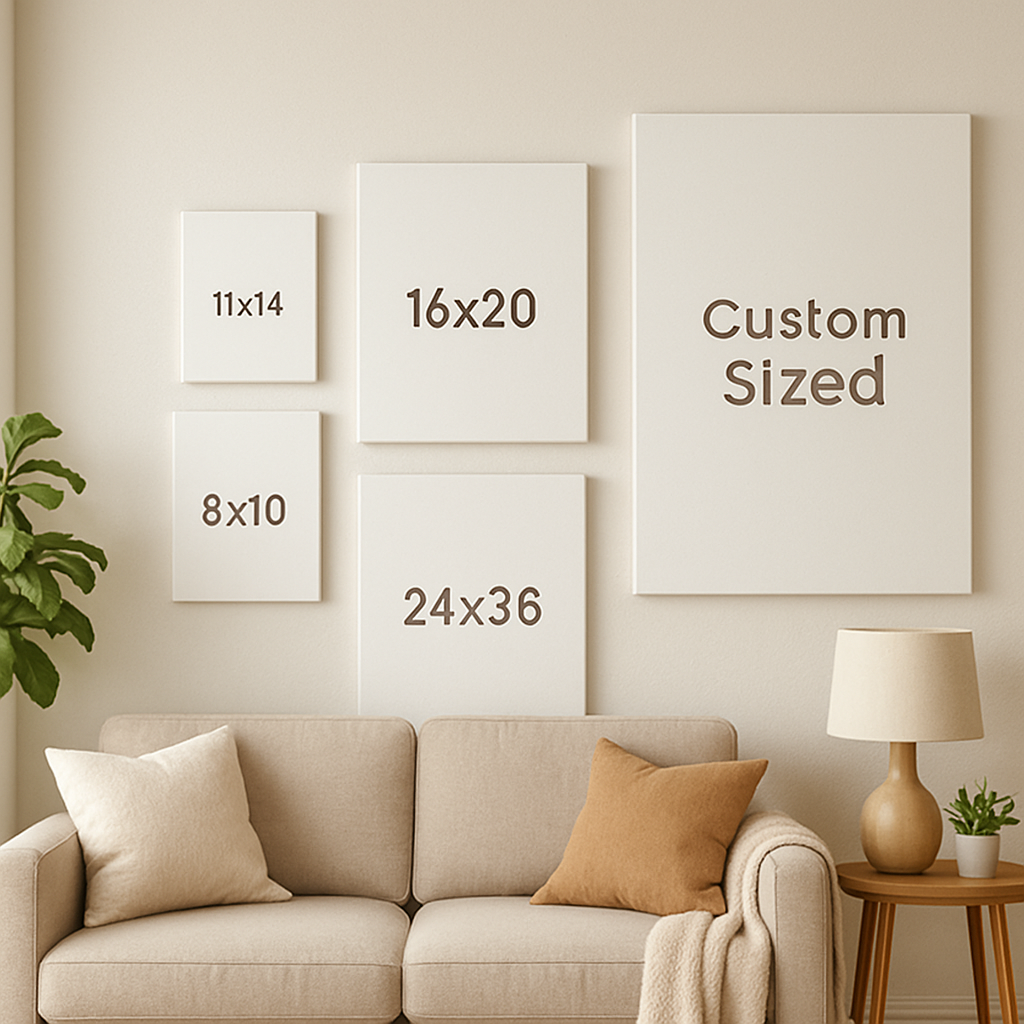
Printing Materials & Aspect Ratios Explained
When you’re picking a canvas, the material you choose is as important as the size. A cotton weave feels like a classic painting, while polyester is more like a sturdy photograph that can survive a busy family room. The right match keeps your image looking vibrant for years and saves you from a disappointing surprise when the piece arrives.
Canvas materials you’ll run into
Cotton canvas is the gold‑standard for fine‑art feels. Its natural fibers absorb pigment inks deeply, giving you richer colors and an archival quality that can last a century if you keep it out of direct sun. The texture is slightly uneven, which many people love because it adds a subtle “hand‑made” vibe to a family portrait. Cotton also breathes, so it handles seasonal humidity swings better than synthetic options, though you’ll still want to avoid wall‑mounted spots that get direct moisture.
Polyester, on the other hand, is a synthetic that resists moisture and won’t expand when humidity spikes. That makes it a safe bet for kitchens, bathrooms, or any spot where the temperature swings. You’ll notice a smoother surface, which is perfect for detailed photos like a close‑up of a newborn’s tiny fingers. Polyester also tends to be lighter, so shipping larger formats feels a bit easier on the wallet.
If you’re not ready to choose one extreme, cotton‑polyester blends give you the best of both worlds: a hint of natural texture plus the durability of a synthetic. They sit in the sweet spot for most residential orders – affordable enough for a gift but still looking premium. Most print shops, including heartful.gifts, use a 50/50 blend for their mid‑range catalog because it balances cost, feel, and longevity.
Linen and even hemp are niche options. Linen offers an ultra‑premium, slightly irregular weave that mimics museum‑quality frames, but the price jumps quickly. Hemp is eco‑friendly and adds a rustic look, though it’s less common in mass‑order shops. If you’re celebrating a milestone and want the “extra special” touch, a linen canvas can turn a simple portrait into a heirloom‑ready piece.
Canvas weight also matters. An 8–10 oz canvas feels lightweight and is fine for a small 12×12 piece above a nightstand. Medium‑weight 12–14 oz works well for typical 20×30 family scenes, giving the print a solid hand without making mounting a hassle. Heavy‑weight 16 oz+ feels substantial and is recommended for large statement pieces over a sofa; the extra heft reduces sagging on big stretcher bars but does increase shipping cost.
Aspect ratios – why they matter
Aspect ratio is the relationship between width and height. A 4:3 photo (think old‑school TV) will look squashed if you force it into a 3:2 (classic 20×30) canvas without cropping. The same goes for a panoramic 2.35:1 shot that you try to fit into a square 1:1 format – you’ll lose the dramatic sweep. Matching the ratio preserves the composition the photographer intended, so the emotional impact stays intact.
The most common ratios you’ll see on ordering pages are 1:1, 4:3, 3:2, and 16:9. If your image already matches one of these, you can pick a canvas that keeps the whole picture intact. If not, decide whether you’re willing to crop a little or add a subtle border to preserve the entire scene. A thin white or colored border can look intentional and even frame the photo like a mat, while a hard crop might cut off a beloved detail.
Here’s a quick way to check: open the image in any photo viewer, look at the pixel dimensions (e.g., 3000 × 2000 = 3:2), and then match that to a canvas size that shares the same ratio. If you need a 2.35:1 panorama, look for a custom size like 30×64 inches – many print services will let you specify the exact dimensions, and the extra width turns a wall into a window.
Real‑world examples
Imagine you’re a parent wanting to celebrate your baby’s first birthday. The photo is a vertical portrait (4:5). A standard 16×20 canvas would crop the top of the cake, so you opt for a custom 18×22 size that respects the 4:5 ratio. The result frames the whole cake and the smiling face without any awkward cuts, and the slightly larger canvas fills the nursery wall nicely.
Now picture a spouse who captured a sunrise over the mountains on a 2.39:1 DSLR shot. A standard 24×36 (2:3) would chop off the sweeping sky. By ordering a custom 24×57 canvas, you keep the full horizon, and the room’s wall becomes a window to that sunrise. The extra width also lets you add a subtle “sunrise” quote in the margin if you like a personal touch.
For a corporate‑gift scenario – say a polished headshot for a new manager – the image is typically 5:4. A 20×24 canvas matches that ratio nicely, delivering a balanced portrait that looks professional on an office wall. Because offices often have fluorescent lighting, you might choose a matte finish to reduce glare, and polyester works well there because it won’t warp under the constant temperature.
Actionable checklist
- Identify your photo’s pixel dimensions and calculate the ratio (width ÷ height).
- Choose a material that fits the environment: cotton for living‑room art, polyester for high‑humidity areas, linen for premium gifts.
- Match the ratio to a standard canvas size whenever possible – it saves on cost and production time.
- If the ratio doesn’t line up, decide: crop minimally, add a thin border, or go custom.
- Consider canvas weight: light for small accents, medium for typical family scenes, heavy for large focal pieces.
- Ask the printer about UV‑protective pigment inks – they’ll lock in color for decades (see our canvas material guide for more details).
- Do a quick paper‑tape test: cut a sheet to the chosen dimensions, tape it to the wall, and walk around to feel the visual balance.
Bottom line: the perfect canvas isn’t just about inches on a screen. It’s the marriage of material choice, weight, and aspect‑ratio harmony that turns a snapshot into a lasting memory. Take a minute to run through the checklist above, and you’ll walk away with a canvas that feels tailor‑made for your wall and your story.
Video: Setting Up and Hanging Your Canvas Print
Alright, you’ve finally picked the perfect size from our canvas print size guide and the moment of truth has arrived – getting that piece on the wall without a disaster.
1. Gather your tools (and a cup of coffee)
Before you start, grab a measuring tape, a pencil, a level, some picture‑hanging hooks or a simple D‑ring kit, and a sturdy drill if you’re going into studs. If you’re nervous about making a hole, a hammer‑nail combo works for lighter canvases, but for anything over 20 × 30 you’ll want the extra support.
Does it feel like a lot? Think of it like prepping a recipe – the better the prep, the smoother the finish.
2. Measure twice, mark once
First, decide the eye‑level height. Most people find the sweet spot at about 57‑60 inches from the floor to the canvas center. Measure that height, then mark the spot where the top edge will sit.
Next, pull out your tape and lay out the exact width of the canvas on the wall. Lightly pencil the corners – these are your guide lines, not permanent scars. If you’re hanging a gallery‑wrap, remember the extra 1‑2 inches of wrap that will show around the edges.
So, what’s the easiest way to keep everything straight? A simple piece of masking tape across the wall can act as a ruler and keep your marks aligned.
3. Pick the right hanging method for the size
Small canvases (under 12 × 12) can usually hang from a single nail or hook. Medium pieces (12 × 12 up to 20 × 30) benefit from two D‑rings on the back with a picture wire stretched between them. Large statement pieces (24 × 36 and up) are safest on a sturdy French cleat or a heavy‑duty wall anchor.
Why bother with D‑rings? They distribute the weight evenly, so you won’t end up with a crooked tilt after a few weeks.
For extra peace of mind, check out this framing tip guide that walks through choosing the perfect hardware for canvas prints.
4. Level, level, level
Hang the first hook or cleat, then use your level to make sure it’s perfectly horizontal. Even a half‑inch tilt is noticeable once the canvas is up, and it can feel sloppy – something you definitely don’t want for a cherished family photo.
Once the hardware is level, attach the canvas. If you’re using a wire, pull it tight against the hook and step back. The level should confirm the top edge is even; if not, adjust the wire a little and re‑check.
5. Secure and step back
Give the canvas a gentle push to see if it feels solid. For heavier pieces, it’s a good idea to add a second hook a few inches below the first – that way the weight is shared and the canvas won’t sag over time.
Now take a step back, look at it from different angles, and ask yourself, “Does it feel right?” If something feels off, don’t be afraid to tweak the placement. A tiny shift of an inch can make a world of difference in how the piece integrates with the surrounding décor.
6. Final touches
Wipe the surface with a dry microfiber cloth to remove any dust from the installation process. If you live in a sunny spot, consider a UV‑protective acrylic sheet (even though canvas doesn’t need glass, it adds extra defense against fading).
Lastly, enjoy the moment. You’ve just turned a digital file into a tangible memory that now lives on your wall. That feeling of stepping back and seeing the whole family smile on the canvas? That’s the payoff of a well‑executed canvas print size guide combined with a careful hanging routine.
Need a quick sanity check? Run the paper‑tape test again with the canvas outline now that it’s up – if the mock‑up still feels balanced, you’ve nailed it.
Common Mistakes to Avoid When Selecting Canvas Sizes
1. Picking a canvas that’s too tiny
We’ve all been there – you find a gorgeous photo, click the smallest size option, and end up with a piece that looks like a postage stamp on a wall.
When a canvas is undersized artwork sits above a sofa or bed, it creates a visual gap that feels unfinished. The rule of thumb? Aim for 50‑75 % of the furniture’s width. If your headboard is 80 in, a 40‑60 in canvas usually does the trick.
So, what should you do? Grab a piece of paper, cut it to the width you’re eyeing, and tape it up. If it still looks lost, you probably need to go up a size.
2. Ignoring the room’s scale
Large rooms love big statements, but a massive canvas in a cozy hallway can overwhelm the space, making it feel cramped.
Conversely, a modest 12 × 16 in a vaulted living room will get swallowed by the ceiling and never make an impact. Think about the room’s overall square footage and ceiling height before you settle on a dimension.
Ask yourself: “If I stand in the middle of the room, does this piece dominate or fade?” If the answer wavers, adjust the size or consider a gallery wall.
3. Forgetting the viewing distance
We often pick a size based on the wall, not on how far we’ll actually sit from it. A canvas that’s perfect when you’re five feet away can look pixelated from eight feet.
The quick math is: viewing distance (in feet) × 12 = ideal diagonal in inches. Five feet × 12 = 60‑inch diagonal, roughly a 30 × 40 canvas. If your family room is a “movie‑theater” layout, bump the diagonal up a bit.
It’s a tiny calculation, but it saves you from buying a piece that looks soft when you’re lounging on the couch.
4. Over‑cropping the image to fit a standard size
Standard sizes are cheap, but forcing a portrait‑oriented photo into a landscape frame can chop off the most meaningful part – the smile, the skyline, the tiny hand.
Before you compromise, ask: “Do I really need this exact dimension, or can I go custom?” A modest custom size often costs just a little extra and preserves the composition.
When you’re gifting a parent a baby’s first birthday shot, that extra inch can keep the whole cake in frame, and that’s worth it.
5. Neglecting the canvas weight and frame footprint
Heavy‑weight canvases (16 oz + ) look impressive, but they need sturdier hanging hardware. If you treat a 30 × 40 heavy canvas like a lightweight 16 × 20, the hooks will sag and the piece will tilt over time.
Check the product specs – most print‑on‑demand shops, including heartful.gifts, list the weight. Match the hardware: two D‑rings for medium pieces, a French cleat for anything over 24 × 36.
And remember the “buffer” rule: leave 2‑4 in between the canvas edge and surrounding furniture. It keeps the piece breathing and prevents a cramped look.
6. Skipping the paper‑tape test
If you’ve ever bought a canvas that looked perfect on screen but felt off on the wall, you know the pain. The paper‑tape test is a free, zero‑risk way to avoid that surprise.
Cut cardstock to your intended dimensions, tape it where the top edge will sit, step back, and live with it for a few minutes. Does it feel balanced? Does it draw the eye without stealing the show?
When the test feels right, you’ve practically nailed the size before you even click “add to cart.”
7. Forgetting to account for the wrap and border
Gallery‑wrap canvases add 1‑2 in of fabric around the edges. If you order a 24 × 36 and plan to hang it flush, the visual size will actually be closer to 26 × 38.
That extra width can shift the whole balance, especially above a narrow console. Add those inches into your wall‑space calculations so you don’t end up with a piece that looks like it’s “hanging off” the wall.
Bottom line: the most common canvas size slip‑ups are easy to dodge if you pause, measure, and test before you buy. A few minutes of planning saves you a pricey reorder and guarantees the canvas feels just right for your family, your space, and your heart.
Conclusion
At the end of the day, picking the right canvas size is less about math and more about feeling right in your space. You’ve learned to measure the wall, match the image’s visual weight, calculate a viewing‑distance diagonal, and run a cheap paper‑tape test before you ever click “add to cart.”
Those simple steps save you from ordering a piece that looks perfect on screen but feels off on the wall, and they protect your budget from costly reorders. Remember the wrap and border add a couple of inches – factor them in so the final visual size matches your expectation.
If you’re a parent framing a family portrait, a gift‑giving spouse selecting a vacation landscape, or anyone who just wants a beautiful memory on the wall, the checklist works the same: measure, test, adjust, then order. A quick pause to double‑check the dimensions is worth the few minutes of effort.
So, what’s the next move? Grab a sheet of kraft, tape it up, and see if the size feels right. When it does, you’ll know you’ve found the sweet spot and can confidently place your order.
Need a hassle‑free way to turn that perfect size into a gallery‑wrap canvas? Heartful.gifts offers a straightforward ordering flow that respects the guide you just followed. Happy hanging!
FAQ
How do I figure out the right canvas size for a family portrait?
Start by measuring the wall area where the portrait will live, then cut a piece of kraft or newsprint to the dimensions you’re eyeing. Hold it up and step back – does the frame feel like it’s hugging the space or floating away? For a family portrait, aim for a canvas that covers roughly 50‑70 % of the furniture width; that usually lands between 16×20 and 24×36 inches. The paper test lets you see the balance before you click ‘add to cart’.
What’s the best way to account for viewing distance when choosing a canvas?
Take the distance you usually sit from the wall, multiply it by 12, and you’ve got a rough diagonal in inches. If you lounge five feet away, a 60‑inch diagonal (about 30×40) feels crisp; eight feet pushes you toward a 72‑inch diagonal (roughly 36×48). Once you have that diagonal, pick the nearest standard size that matches the aspect ratio, or order a custom size that hits the number exactly. It’s a quick math trick that saves you from a blurry‑seeing canvas.
Should I choose a standard size or go custom for a panoramic photo?
Standard sizes are cheap and ship fast, but they can force you to crop a panoramic shot and lose that sweeping horizon. If your photo is wider than 2:1, a 24×36 canvas will chop off the edges. In those cases, a custom canvas—say 30×70 inches—keeps the whole scene intact and turns the wall into a window. The trade‑off is a slightly higher price and a few extra days for production, which most gift‑buyers find worth it for a memorable landscape.
How much extra space should I leave for a gallery‑wrap border?
The canvas wrap adds typically 1‑2 inches of fabric on each side, so a 24×36 gallery‑wrap actually looks closer to 26×38 on the wall. To avoid a crowded feel, add those extra inches to your wall‑space calculations. A good rule of thumb is to leave at least 2‑4 inches between the edge of the wrapped canvas and nearby furniture or trim. That buffer lets the artwork breathe and prevents it from looking like it’s glued to the wall.
Can I use the paper‑tape test for oddly shaped walls?
Yes – the paper‑tape test works on any shape, even a narrow hallway or an irregularly sized alcove. Cut a piece of cardstock to the exact width and height you’re considering, then tape it at eye level. Walk the room; if the mock‑up feels cramped or disappears into the corners, trim a few inches and try again. Because the test uses physical dimensions, it accounts for quirks that a digital mock‑up often ignores, giving you confidence before you order.
How does the weight of the canvas affect my hanging hardware?
Heavier canvases (16 oz +) need sturdier anchors – think two D‑rings or a French cleat – because a single nail will let the piece sag over time. Lighter canvases (8‑10 oz) can hang from a single picture hook, but still check the manufacturer’s weight rating. When you’re unsure, weigh the rolled canvas (most services list the weight) and match it to hardware that supports at least 1.5 times that load. This simple check prevents a future ‘tilt‑and‑slide’ disaster.
What common mistakes should I avoid when ordering from heartful.gifts?
The biggest slip‑up is ordering a size that looks perfect on the screen but feels off on the wall. To avoid that, always do the paper‑tape test, factor in the wrap border, and double‑check the aspect ratio before you finalize. Another common mistake is ignoring the room’s scale – a 12×16 piece can get lost in a high‑ceiling loft. Finally, don’t forget to match the canvas weight to the hanging hardware; a mismatch leads to sagging and a frustrated look.