

Meaningful Gifts: Why Personalisation Matters Most
Over 80 percent of European young adults say that meaningful gifts create stronger emotional connections at special occasions than traditional material items. Choosing presents that reflect personal character and genuine care can be surprisingly complex, especially during the holiday rush. Whether you want to impress a British friend or surprise a loved one, understanding what makes a gift truly memorable helps you cut through outdated perceptions and discover options that mean more than their price tag.
Table of Contents
- Defining Meaningful Gifts And Common Misconceptions
- Types Of Meaningful Gifts And Their Impact
- Personalisation: Creating Lasting Emotional Value
- Mistakes To Avoid When Gifting Meaningfully
- Meaningful Gifting In The European Context
Key Takeaways
| Point | Details |
|---|---|
| Meaningful Gifts Go Beyond Material Value | Thoughtful gestures and personal understanding create lasting emotional connections, not just monetary transactions. |
| Types of Gifts Matter | Personalised presents, experiential offerings, and material objects each have unique emotional impacts, enhancing relationships in different ways. |
| Understanding the Recipient is Crucial | Givers should prioritise the recipient’s preferences and emotional context to avoid common gifting mistakes and foster genuine connections. |
| Cultural Context Influences Gifting | Awareness of diverse regional customs and gifting norms strengthens the emotional resonance of gifts in European cultural settings. |
Defining Meaningful Gifts and Common Misconceptions
Meaningful gifts transcend simple material exchange, representing complex emotional and relational experiences that connect individuals through thoughtful gestures. Modern perspectives suggest that gift-giving is far more nuanced than traditional transactional views, involving intricate social dynamics and personal understanding.
Contrary to popular belief, meaningful gifts are not about monetary value or adherence to social obligations. Relational gifting research demonstrates that truly impactful presents emerge from genuine empathy, deep personal knowledge, and an authentic desire to communicate care. This approach requires moving beyond surface-level expectations and understanding the recipient’s unique emotional landscape.
The contemporary understanding of gift-giving recognises it as a sophisticated social institution with multiple layers of meaning. Gift definitions have evolved beyond simple reciprocity, acknowledging that presents can represent complex emotional investments rather than mere economic transactions. Recognising this complexity allows individuals to approach gift selection with greater intentionality and emotional intelligence.
Pro tip: Before selecting a gift, spend time reflecting on the recipient’s personal interests, recent life experiences, and emotional context to craft a truly meaningful present.
Types of Meaningful Gifts and Their Impact
Gift-giving represents a sophisticated art form with multiple dimensions, extending far beyond simple material exchanges. Different types of gifts carry unique emotional signatures, each capable of creating profound connections between individuals. Personalised gifts specifically transform emotional experiences, elevating the act of giving from a transactional interaction to a deeply meaningful moment of human connection.
Research reveals three primary categories of meaningful gifts: personalised presents, experiential offerings, and material objects. Personalised gifts stand out as particularly powerful, as they demonstrate intentional effort and deep understanding of the recipient’s identity. These presents go beyond generic selections, incorporating specific details that reflect personal knowledge, shared memories, or individual preferences. By tailoring gifts to specific individuals, givers communicate a level of care that transcends monetary value.
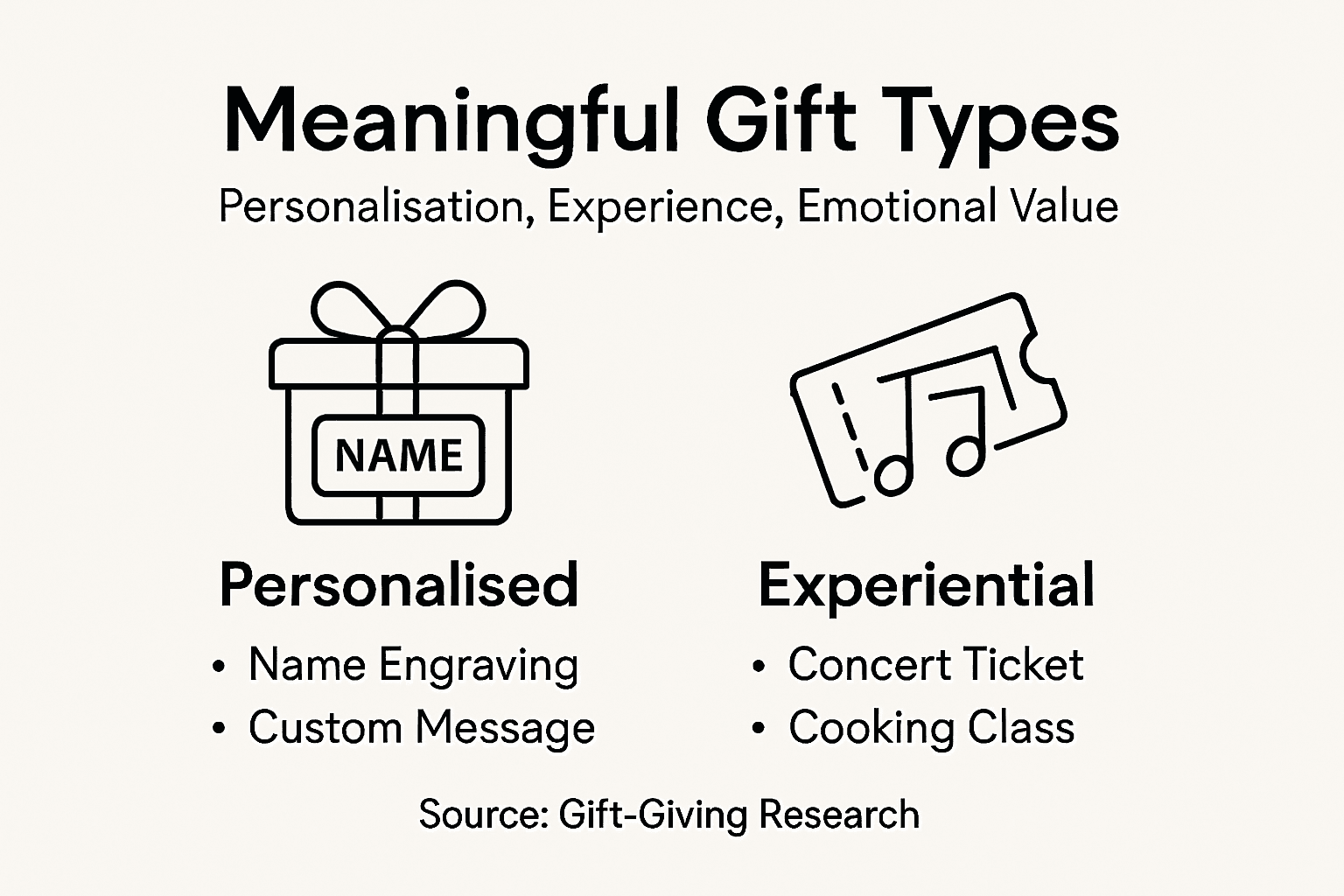
Experiential gifts demonstrate remarkable relationship-building potential, often generating stronger emotional responses compared to traditional material presents. Such gifts might include shared experiences like concert tickets, cooking classes, adventure opportunities, or travel experiences that create lasting memories. Unlike physical objects that can be quickly forgotten, experiential gifts generate ongoing emotional resonance, allowing recipients to create narratives and connections that extend well beyond the initial moment of gifting.
Here is a comparison of the primary types of meaningful gifts and their distinctive emotional effects:
| Gift Type | Description | Unique Emotional Impact |
|---|---|---|
| Personalised | Tailored with recipient-specific details | Deep feeling of being understood |
| Experiential | Shared activities or events | Stronger memory creation |
| Material Object | Physical present, thoughtfully chosen | Comfort through tangible appreciation |
Pro tip: When selecting a gift, prioritise understanding the recipient’s emotional landscape and personal interests rather than focusing solely on monetary value or societal expectations.
Personalisation: Creating Lasting Emotional Value
Personalisation transforms ordinary gifts into extraordinary emotional experiences, elevating the act of giving beyond mere material exchange. Psychological studies reveal profound emotional impacts of personalised presents, demonstrating how carefully selected and customised gifts can significantly enhance both giver and recipient’s emotional connections.

The concept of vicarious pride emerges as a fascinating psychological phenomenon in gift-giving. Emotional responses to customised gifts show that recipients experience a unique emotional mirroring, where they share in the giver’s creative satisfaction and thoughtfulness. This emotional resonance creates a deeper connection that transcends the physical object, making the gift a powerful symbol of understanding and care.
Personalisation strategies go beyond simply adding a name or date. They involve deeply understanding the recipient’s preferences, interests, and emotional landscape. By incorporating elements that reflect shared memories, personal jokes, or meaningful symbolism, givers can create gifts that become cherished keepsakes. These personalised presents communicate a level of intimacy and effort that mass-produced items simply cannot replicate, transforming the gift into a narrative of relationship and connection.
Pro tip: When personalising a gift, focus on meaningful details that reflect genuine understanding of the recipient’s unique personality and shared experiences.
Mistakes to Avoid When Gifting Meaningfully
Meaningful gift-giving requires nuanced understanding and genuine empathy, extending far beyond simple transactional exchanges. Common gifting mistakes can inadvertently damage relationships, transforming well-intentioned gestures into potential sources of awkwardness or emotional disconnect.
One critical error is prioritising personal impressions over the recipient’s actual needs and preferences. Many individuals mistakenly select gifts that reflect their own tastes or demonstrate perceived generosity, rather than truly understanding the recipient’s desires. Consumer psychology research highlights four significant gifting pitfalls, including overvaluing novelty, focusing on momentary reveal excitement, and neglecting long-term utility of presents.
Power dynamics and emotional complexity also play crucial roles in meaningful gift selection. Expensive or overly elaborate presents can create uncomfortable imbalances, potentially making recipients feel obligated or embarrassed. Successful gift-giving requires carefully navigating relationship contexts, understanding personal boundaries, and recognising that true meaningful connection emerges from thoughtful consideration rather than monetary value.
This table summarises key gifting mistakes and their potential negative consequences:
| Common Mistake | Example Situation | Likely Outcome | Recommended Alternative |
|---|---|---|---|
| Ignoring recipient’s preferences | Choosing based on self-taste | Recipient feels misunderstood | Observe and listen to recipient |
| Overvaluing novelty | Giving flashy, impractical gift | Present is forgotten quickly | Opt for thoughtful relevance |
| Prioritising expense | Overly lavish present | Recipient feels uncomfortable | Match gift to relationship context |
| Neglecting long-term utility | Gift with short-lived use | Loss of emotional connection | Choose lasting, meaningful options |
Pro tip: Always approach gift selection by first listening and observing the recipient’s genuine interests, rather than assuming what they might want.
Meaningful Gifting in the European Context
Gift-giving in Europe represents a sophisticated cultural ritual deeply embedded in social interactions and relationship dynamics. European gifting traditions reveal complex social structures that extend far beyond simple material exchanges, emphasising emotional connection and cultural nuance.
Regional variations across European cultures demonstrate remarkable diversity in gifting approaches. While Germans typically prioritise practical and functional presents, Italians invest significant emotional energy in warm presentation, and Scandinavian cultures emphasise sustainable and meaningful selections. Cultural differences profoundly shape gift-giving expectations, transforming what might seem like a simple transaction into a nuanced social communication.
Understanding these cultural subtleties requires deep empathy and awareness. Meaningful European gifts are not merely objects exchanged, but intricate expressions of social bonds, respect, and understanding. The most successful presents transcend material value, instead communicating genuine appreciation, understanding of individual preferences, and recognition of shared cultural contexts.
Pro tip: Research the specific cultural gifting norms of the recipient’s region to ensure your present resonates authentically and respectfully.
Discover the Power of Personalised Gifts to Truly Connect
The article emphasises that meaningful gifting goes beyond monetary value and requires a deep understanding of the recipient’s emotional world. If you want to avoid common gifting mistakes like ignoring personal preferences or overvaluing novelty, personalised presents offer a perfect solution. By choosing gifts that reflect genuine care and shared memories, you create lasting emotional bonds that resonate far beyond the initial moment of giving.
Explore a wide range of customised phone cases and unique designs at Heartful.gifts. Our personalised gifts help you express authentic appreciation with thoughtful touches that embody the principles of meaningful gifting discussed in the article. Act now to make your next present unforgettable and benefit from our quick EU-wide shipping and seasonal promotions. Start creating something truly special today at Heartful.gifts and choose gifts that speak directly to the heart.
Frequently Asked Questions
What are meaningful gifts?
Meaningful gifts are presents that transcend mere material value, representing emotional connections and personal understanding between the giver and recipient. They reflect genuine care and empathy, emphasising thoughtful gestures rather than transactional exchanges.
Why does personalisation matter in gift-giving?
Personalisation enhances the emotional impact of gifts by demonstrating that the giver has put thought into the recipient’s preferences and personality. Customised gifts create lasting memories and deepen connections, as they reflect shared experiences and understanding.
What types of gifts can be personalised?
Gifts can be personalised in various ways, including by adding names, dates, or specific details that reflect the recipient’s identity, preferences, and shared memories. These can range from customised items like jewellery and clothing to experiential gifts like tickets to events tailored to the recipient’s interests.
What mistakes should I avoid when gifting?
Common mistakes include overlooking the recipient’s preferences, overvaluing novelty or expense, and ignoring the long-term utility of the gift. It’s essential to prioritise meaningful relevance and emotional connection to avoid misunderstandings and ensure the gift is well-received.