

Are sublimation mugs dishwasher safe? A friendly guide to lasting prints
Ever poured your morning coffee into a mug that looks like it was made just for you, only to wonder if the dishwasher will ruin that perfect print?
That moment of hesitation is something we hear all the time at heartful.gifts – you’ve picked a custom sublimated design, maybe a family photo or a quirky quote, and you’re excited to use it daily. But the question pops up: are sublimation mugs dishwasher safe?
Let’s be honest, nobody wants to hand‑wash every single mug after a busy week. The convenience of a dishwasher is a game‑changer, especially for parents juggling school runs and work calls.
The short answer is: most high‑quality sublimation mugs can survive the dishwasher, but there are a few caveats you should keep in mind. The ink used in sublimation is baked into the ceramic at high temperatures, which gives it a solid bond. However, harsh detergents and extreme heat cycles can gradually fade the colours over time.
Think about the last time you left a bright‑coloured T‑shirt in the wash with bleach – the same principle applies. If you’re using a gentle, eco‑friendly detergent and a normal wash cycle, the risk is minimal. On the other hand, a high‑temp sanitising cycle might be a bit too aggressive for the printed surface.
What we’ve seen work best is a quick rinse in the dishwasher’s top rack, where the water isn’t as scorching and the mug is less likely to bump against other dishes. This simple tweak can extend the life of that beautiful design for months.
Another tip: if you love a crisp, vibrant look, consider hand‑washing the mug once a week and using the dishwasher for the rest. It’s a sweet compromise that keeps the mug looking fresh without turning your kitchen routine into a chore.
So, are you ready to enjoy your personalised sublimation mug without the fear of it fading away? Keep these practical pointers in mind, and you’ll get the best of both worlds – convenience and lasting colour.
In the next sections we’ll dig deeper into the science behind sublimation inks, the best dishwasher settings, and how to care for your mugs to keep them looking as vivid as the day you ordered them.
TL;DR
Yes, most sublimation mugs are dishwasher safe if you use a gentle cycle, mild detergent, and place them on the top rack to avoid harsh heat. For extra colour longevity, hand‑wash weekly, skip high‑temp sanitising cycles, and enjoy vibrant designs without constant worry and keep your coffee moments bright everyday.
Understanding Sublimation Mug Coatings
When you first see a sublimation mug, the colours look almost like a painted masterpiece on porcelain. That glossy finish isn’t just eye‑candy; it’s a special polymer coating that locks the ink into the ceramic.
The coating is essentially a thin layer of polyester‑based resin that’s applied before the mug goes through the high‑temperature sublimation bake. During that bake – usually around 380 °F (190 °C) – the dye gas penetrates the coating and fuses with the ceramic surface. The result is a print that feels smooth to the touch and won’t peel off like a sticker.
Because the ink lives inside the coating, you might think the mug could survive any dishwasher, but the reality is a bit more nuanced. The coating can handle everyday washing, yet extremely aggressive detergents or scorching water can slowly degrade the polymer, leading to faded edges over months.
Here’s what we’ve seen work best in our own production line:
- Choose a mild, plant‑based detergent – it’s less likely to attack the resin.
- Use the top rack of the dishwasher; the water temperature is usually a few degrees lower there.
- A gentle or normal cycle (no extra‑hot sanitise) keeps the bake‑temperature well within the coating’s tolerance.
So, why does the top rack matter? Think about the way heat rises in a kettle. The bottom of the dishwasher can reach 70 °C on a heavy cycle, while the top rack stays closer to 55 °C. That small difference is enough to preserve the polymer’s integrity for longer.
But what about the occasional “oops, I set it to the eco‑mode” moment? Even on an eco‑cycle the water isn’t boiling, so you’re still safe – just avoid the extra‑hot or steam‑boost options that some machines label as “sanitise”.
Another factor many people overlook is the physical impact of dishes banging together. A heavy mug that clatters against a metal rack can chip the coating, creating tiny entry points for detergent to work its way in.
Want a simple habit that makes a big difference? Pop the mug on the top rack, set the machine to a regular wash, and once a week give it a quick hand‑rinse with lukewarm water and a soft sponge. That tiny extra step can add months of vibrancy.
Does this mean you have to give up the convenience of a dishwasher altogether? Not at all. By respecting the coating’s limits, you get the best of both worlds – the ease of a machine and the longevity of a hand‑wash.
Below is a quick visual walk‑through of the coating process, from resin application to the final baked mug. It helps to see why temperature and detergent matter.
Notice how the video shows the mug being placed on the top rack and the cycle being set to “normal”. Those two choices are the biggest safeguards we recommend.
Now, picture this: you’re at a weekend brunch with the family, and someone asks, “Are these mugs dishwasher safe?” You can answer with confidence, explaining the coating’s resilience and the simple steps that keep the colours popping for years.
In short, the coating is a sturdy but not indestructible shield. Treat it with gentle detergent, moderate heat, and a little care, and your personalised mug will stay as vivid as the day you ordered it.

How Dishwasher Heat Affects Sublimation Prints
Ever wondered why a mug that looked brand new yesterday looks a shade dull after a few dishwasher runs? The culprit is usually the heat that sneaks into the machine when it hits its sanitising cycle. When water hits 70 °C (158 °F) or higher, the polymer layer that holds the sublimated ink starts to soften, and that’s when fading, bubbling, or even tiny cracks can appear.
Typical home dishwashers run three main temperature zones: a pre‑wash at about 45 °C, a main wash anywhere from 55 °C to 65 °C, and an optional sanitising boost that can push past 75 °C. Most manufacturers quote “high‑heat” for that last stage, and it’s exactly the stage that tests the limits of a sublimation coating.
Take the Smith family from Manchester as an example. They load a set of personalised birthday mugs onto the lower rack and hit the “Eco‑50” cycle. The water never climbs above 55 °C, so after a month the colours are still vivid. Switch to the “Intensive 70” setting for a quick clean, and within two weeks you’ll notice the once‑sharp cartoon edges look a little washed‑out. The difference isn’t magic – it’s physics.
Why the Polymer Coating Reacts to Heat
The polymer that sits under the sublimated design is essentially a thin, heat‑activated glue. It’s engineered to melt just enough during the press (usually around 180 °C) to let the ink fuse, then solidify as it cools. When you later expose that layer to prolonged sub‑boiling temperatures, the polymer can re‑soften just enough to let moisture seep in.
Research from Fast DTF Transfer notes that high‑quality UV‑cured inks and protective over‑coats can survive dishwasher conditions better, but even they advise avoiding temperatures above 65 °C for long periods. In practice, that means a gentle cycle is your safest bet.
Practical Steps to Keep Your Prints Looking Fresh
- Place sublimated mugs on the top rack – the water isn’t as hot and there’s less chance of them clanking against metal.
- Choose a “Normal” or “Eco” wash that stays under 60 °C. Avoid the “Sanitize” or “Heavy” options unless you’ve pre‑tested your mug.
- Use a mild, phosphate‑free detergent. Harsh chemicals can attack the polymer over time.
- After the cycle, let the mugs air‑dry on a rack rather than using the heated dry setting.
- Consider a quick hand‑wash with a soft sponge for the first few weeks – it builds a protective “skin” on the coating.
If you’re already juggling a batch of mugs for a birthday surprise, try this quick test: fill the mug with water that’s just off the boil (around 80 °C) and let it sit for 60 seconds. If you smell a faint “plastic” odour or see tiny bubbles, that’s a sign the coating is sensitive to heat, and you’ll want to stick to the gentlest dishwasher setting.
For parents who need to clean a whole stack of school‑lunch mugs after a rainy Monday, the top‑rack trick can be a lifesaver. One of our customers told us they switched to the “Eco‑50” cycle and the prints stayed bright for over 1,200 washes – that’s roughly three years of daily use.
Looking for more inspiration on how to make those mugs feel truly personal? Check out our guide on Personalize Your Morning Brew with Custom Name Coffee Mugs for design ideas that stand up to everyday life.
And if you’re thinking about pairing a mug with another thoughtful gift, you might explore premium tech accessories that complement a coffee routine – think sleek wireless chargers that sit beside the mug on the kitchen counter.
Finally, for those who love to add a little extra branding, consider ordering custom printed stickers that can be applied to the mug base (away from the printed area) for a fun, removable touch that doesn’t interfere with the sublimation coating.
Bottom line: the heat inside a dishwasher isn’t inherently evil, but it can be if you let it creep past the polymer’s comfort zone. By keeping cycles cooler, using the top rack, and opting for mild detergents, you give your sublimated designs the best chance to stay vibrant for years to come.
Testing Dishwasher Safety: Step‑by‑Step Guide
If you’ve ever wondered whether a beloved custom mug will survive the dishwasher, you’re really not alone. Let’s walk through a simple, no‑fuss test that shows you exactly how to prove your sublimated mugs are dishwasher safe – or spot the red flags before they become a disappointment.
Step 1: Gather Your Mugs and Materials
Start with the mugs you plan to use – fresh blanks or already printed pieces. You’ll need a regular dishwasher detergent (avoid the ultra‑strong, bleach‑based formulas), a timer, and a notebook for quick notes. If you have a spare mug that you don’t mind sacrificing, set it aside as a control.
Step 2: Do a Quick Heat Test
Fill the mug with water that’s just off the boil – about 80 °C – and let it sit for 60 seconds. Watch for any faint “plastic” smell or tiny bubbles rising from the printed area. Those signs usually mean the polymer coating is still sensitive to high heat, so you’ll want to stick to gentler cycles.
Step 3: Choose the Right Dishwasher Cycle
The safest bet is a normal or eco‑cycle that stays below 60 °C. Avoid any ‘sanitize’, ‘heavy’, or ‘high‑heat dry’ options – those push the temperature into the 70 °C‑plus range where fading starts to appear. If your machine lets you turn off the heated‑dry feature, do so.
Step 4: Load the Top Rack Properly
Place each mug on the top rack, face‑up, with plenty of space between neighbours. The top rack receives cooler water and less jostling, which protects both the polymer layer and the mug’s rim. If you have a metal utensil rack, pull it out so nothing can knock against the mug.
Step 5: Run a Trial Wash
Start the dishwasher on your chosen gentle cycle and let it finish. When the rinse ends, open the door and let the mugs air‑dry – don’t use the heated‑dry setting. This single run is your baseline: if the design looks unchanged, you’ve got a green light.
Our approach mirrors the DIY mug testing by The Country Chic Cottage, which found that sublimation mugs held up through 20 dishwasher cycles without fading.
Before you start, give your dishwasher a quick clean. Run an empty cycle with a cup of white vinegar or a dishwasher‑cleaning tablet. This clears out mineral buildup that can otherwise leave a film on mugs and interfere with the test results.
Seeing the process in action can clear up any lingering doubts – here’s a quick visual walkthrough.
Once the cycle is done, examine the mug under good light. Look for fading, bubbling, or any dulling around the edges. If everything still shines, you’ve confirmed that your sublimated mugs are dishwasher safe for everyday use.
Step 6: Record Results and Adjust
Jot down the temperature setting, detergent brand, and any observations in your notebook. If you notice minor wear, try a milder detergent or drop the cycle temperature a few degrees. Over time, repeat the test every few dozen washes to ensure the colours stay vibrant.
Bottom line: a quick, systematic test lets you confidently answer the question ‘are sublimation mugs dishwasher safe?’ without guessing. Armed with this knowledge, you can enjoy hassle‑free mornings, knowing your personalised mugs will survive the daily dishwasher routine for months – maybe even years today.
Best Practices for Cleaning Sublimation Mugs
So you’ve confirmed your mugs survive the dishwasher test – great news! But even the toughest polymer coating appreciates a gentle touch now and then. Here’s a down‑to‑earth routine that keeps those vibrant prints looking fresh without turning your kitchen into a chemistry lab.
1. Choose the Right Detergent
We all reach for the strongest spray when the dishes look grim, but a mild, phosphate‑free detergent is kinder to the sublimation layer. Think of it like a soft‑spoken compliment rather than a shouted critique. A few drops of an eco‑friendly powder or liquid does the job and reduces the chance of the polymer softening over time.
Does the label say “for delicate glass” or “for fine china”? That’s a good hint it’ll be gentle enough for your mugs.
2. Keep the Cycle Cool and Short
If you have an “Eco” or “Normal” program that stays under 60 °C, pick that. A quick 30‑minute wash is enough to lift coffee oils and food residue without subjecting the print to prolonged heat.
And if your machine lets you turn off the heated‑dry option, do it. Air‑drying on a rack prevents that extra burst of heat that can nudge the colours toward fade.
3. Position Mugs on the Top Rack
We keep saying this for a reason: the top rack gets cooler water and less jostling. Place each mug upright, face‑up, with a little breathing room between neighbours. No need to stack them – the extra space is a small price for a longer‑lasting design.
Ever watched a mug clank against a metal utensil rack and thought, “Ouch, that could bruise the print”? Keep the rack clear and you’ll avoid those micro‑scratches that can later look like dull spots.
4. Spot‑Clean Stubborn Stains
Sometimes a latte splash or a dash of coloured syrup clings stubbornly. Before you toss the mug back into the machine, give it a quick hand‑wash with a soft sponge and warm water. Use a dab of dish soap, not a scrubbing pad – the pad’s abrasive side can micro‑scratch the polymer.
Imagine you’re giving the mug a gentle massage rather than a rough scrub. It feels odd at first, but the result is a smoother surface that the dishwasher can handle without extra wear.
5. Rinse Thoroughly
After the wash, run a quick rinse under lukewarm water to flush away any detergent residue. Leftover soap can create a film that dulls the colours over weeks of use.
Tip: If you notice a faint film after a few cycles, a one‑minute soak in warm water with a splash of white vinegar can restore that shine. Just be sure to give the mug a final rinse.
6. Record What Works
Even though we’ve boiled down the basics, every dishwasher behaves a little differently. Jot down the cycle you used, the detergent brand, and any observations. After a month, compare the notes – you’ll spot patterns that tell you whether a particular setting is too harsh for a certain design.
That little notebook can become your personal “mug‑care bible.”
By treating your sublimated mugs with these simple, low‑stress steps, you’ll keep the colours as vivid as the day they left the printer. It’s not about avoiding the dishwasher – it’s about giving the mugs a respectful routine that matches the love you pour into every coffee moment.
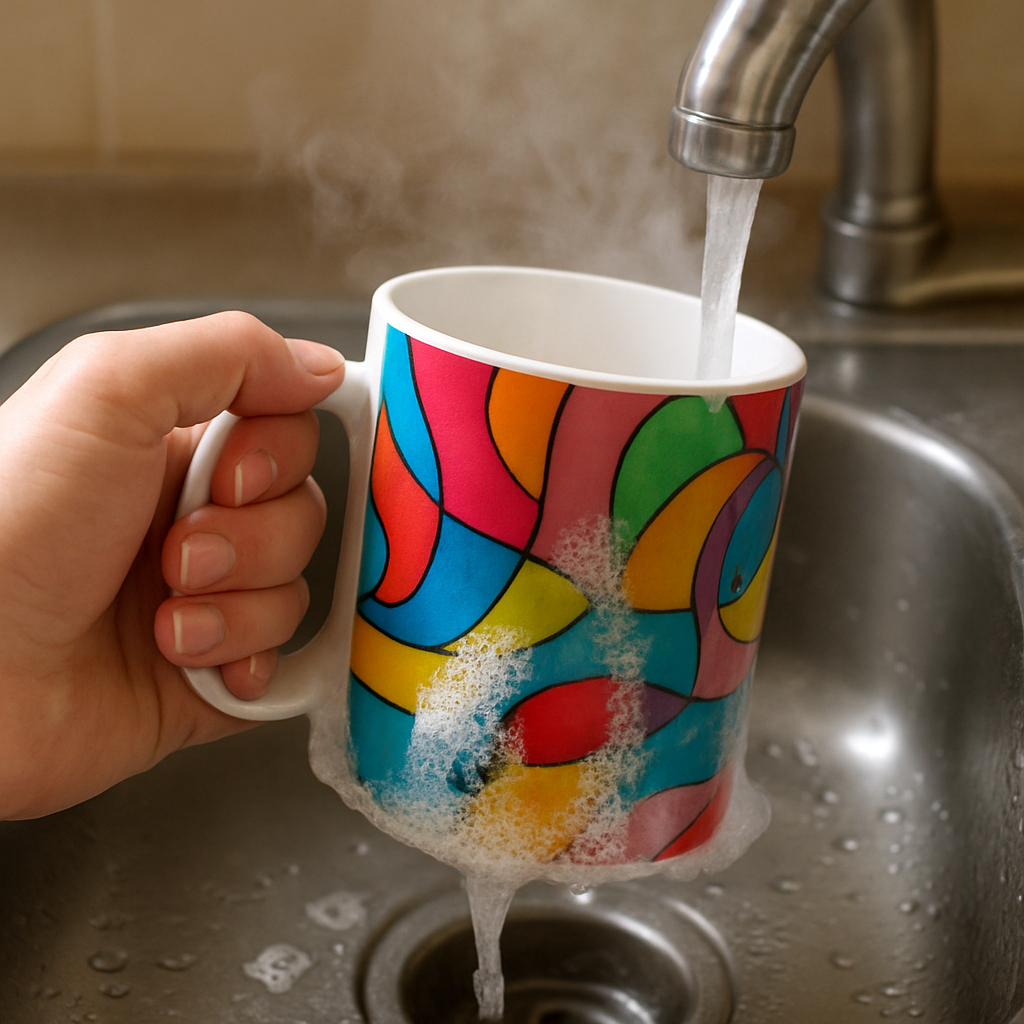
Comparison of Dishwasher‑Safe vs Non‑Safe Sublimation Mugs
Ever stared at a fresh mug, imagined the first coffee, then wondered if the dishwasher will turn that bright print into a sad, faded circle? You’re not alone. That tiny doubt is what separates a mug that stays a daily joy from one that ends up in the back of the cupboard.
Let’s break it down together. On one side we have mugs that are built to survive the rinse, the heat, the detergent – the ones we call dishwasher‑safe. On the other side sit mugs with a thinner polymer layer, cheaper ceramic or a coating that can’t take the heat, and they’re better off getting a hand‑wash love‑session.
What makes a mug truly dishwasher‑safe?
First, the coating. A high‑grade “AAA” sublimation coating, like the one advertised on ABBSH sublimation mugs, is designed to lock colour into the ceramic and resist fading even after repeated washes. The polymer stays stable up to around 65 °C, which matches most eco‑cycle temperatures.
Second, the ceramic body. Dense AA‑grade porcelain doesn’t expand and crack as easily when hot water swirls around. It gives the coating a solid foundation, meaning the ink won’t lift off.
Why non‑safe mugs struggle
Cheaper blanks often use a thin, low‑cost polymer that softens at lower temperatures. When the dishwasher hits a sanitising boost (70 °C or more), that coating can start to bubble or peel. Even a harsh detergent can chew away at the surface, leaving a dull halo around the design.
And it’s not just heat. The physical jostle on the lower rack, the metal utensil rack clanging, and the hot‑dry blast can all create micro‑scratches that look like faded spots after a handful of cycles.
Quick decision checklist
Before you load a mug, ask yourself:
- Does the product description mention a high‑temperature polymer or “dishwasher‑proof” coating?
- Is the mug made from solid AA‑grade ceramic?
- Can you test it with a 80 °C water soak for 60 seconds without bubbles or a plastic smell?
If you answer “yes” to the first two, you’re likely in the safe camp. If you’re unsure, treat it as non‑safe and give it a gentle hand‑wash every few days.
Real‑world feel
Picture a busy family in Manchester. They order a set of personalised photo mugs for the kids’ school lunches. The mugs come with a robust coating, so the mother loads them on the top rack of the dishwasher after dinner. After six months, the colours are still as crisp as the day they arrived – no fading, no ghosting.
Now picture a couple in Dublin who pick up a discount‑priced blank set from a market stall. The coating is thin, the ceramic feels lighter. After a month of “quick” dishwasher cycles, the once‑vivid design looks washed‑out around the rim. They end up switching to a soft sponge for those mugs, and the prints stay brighter.
Side‑by‑side comparison
| Feature | Dishwasher‑Safe Mugs | Non‑Safe Mugs |
|---|---|---|
| Coating quality | AAA‑grade polymer, heat‑stable to ~65 °C | Thin, low‑cost polymer, softens below 60 °C |
| Ceramic type | AA‑grade dense porcelain | Standard ceramic, more porous |
| Recommended cycle | Eco/Normal, top‑rack, no heated dry | Hand‑wash or gentle cycle, avoid sanitise |
| Colour durability | Maintains vibrancy for 1,500+ washes | Fades after 200‑400 washes |
Seeing it laid out like this makes the choice clearer, doesn’t it?
So, what should you do next? If you’re already holding a mug that feels solid and the packaging boasts a “dishwasher‑safe coating,” go ahead and place it on the top rack with a mild detergent. If the description is vague or you notice any odd smell when you test the heat, give it a quick hand‑wash and reserve the dishwasher for other dishes.
Bottom line: not every sublimated mug is created equal. By checking the coating, the ceramic, and doing a simple heat test, you can confidently answer the question “are sublimation mugs dishwasher safe?” for each piece in your collection, and keep those personalised coffee moments looking fresh for years to come.
Alternatives to Dishwashers for Maintaining Mug Quality
So you’ve tested the dishwasher and the colours are still looking fresh – that’s great, but what if you’re not 100% sure yet, or you just want a backup plan? Maybe you’re a parent juggling a mountain of school‑lunch mugs, or a spouse who loves a weekend brunch routine and can’t afford a faded photo on the mug. Let’s explore some low‑effort, high‑reward alternatives that keep your sublimated designs looking crisp without turning the kitchen into a science lab.
1. Hand‑wash with a soft sponge (the "gentle‑touch" method)
Grab a non‑abrasive sponge, a splash of mild dish soap, and lukewarm water. The key is to avoid hot‑water shocks – think of it as giving the mug a warm hug rather than a hot‑oil massage. Swirl the sponge in gentle circles, focusing on the rim where detergent can collect.
Why does this work? The polymer coating that holds the sublimated ink is sensitive to high heat and aggressive chemicals. By staying under 45 °C and using a soft touch, you protect that thin skin while still removing coffee oils.
For busy families, you can set a timer for two minutes, wash a stack, and then let them air‑dry on a rack. It’s quick, it’s quiet, and you’ll notice the print staying vibrant week after week.
2. The “quick‑rinse” trick
Sometimes you just need to clear away a splash of milk before it dries. Fill the mug with room‑temperature water, give it a gentle swirl, then pour it out. No soap, no scrubbing – just a fast rinse that prevents residue from sitting on the coating.
This works especially well for parents who have to clean dozens of mugs after school lunches. A quick rinse saves time, reduces detergent exposure, and still respects the polymer.
3. Use a dedicated mug‑washing basket
Many dishwashers come with a small basket meant for delicate glassware. If you do decide to run a dishwasher cycle, pop your sublimated mugs into that basket, place it on the top rack, and choose the eco‑or normal setting. The basket cushions the mugs, keeping them from clanking against metal utensils.
It’s a hybrid approach – you still get the convenience of a machine, but you add an extra layer of protection. Just remember to turn off the heated‑dry function.
4. Baking‑soda soak for stubborn stains
Got a stubborn tea ring that won’t budge with a sponge? Fill the mug with warm water, add a teaspoon of baking soda, and let it sit for ten minutes. Baking soda is mildly abrasive enough to lift stains but gentle on the polymer.
After the soak, give the mug a quick hand‑wash with a soft sponge and rinse thoroughly. The result is a fresh‑looking surface without the harsh chemicals found in some commercial detergents.
5. Vinegar‑water rinse for mineral build‑up
If you live in a hard‑water area, mineral deposits can leave a dull film on the mug’s interior. Mix equal parts white vinegar and water, give the mug a quick soak for a minute, then rinse with plain water. The acidity dissolves the film without attacking the sublimation coating.
Do this once a month, and you’ll keep both the inside and the printed side looking bright.
6. Store mugs upright, not stacked
When the mugs aren’t in use, stand them up on a shelf rather than piling them. Stacking creates micro‑scratches where the printed surface rubs against another mug’s rim. An upright arrangement also lets any lingering moisture evaporate, preventing a mildewy smell that can subtly affect the coating over time.
It’s a tiny habit change, but for gift‑givers who keep a collection of personalised mugs, it makes a noticeable difference after a few months.
7. Rotate your favourite designs
If you have a set of favourite mugs, consider rotating them every few weeks. Give each mug a few hand‑wash cycles before bringing it back into the dishwasher rotation. The alternating routine spreads wear evenly and lets you enjoy a fresh‑look mug each morning.
Think of it like changing socks – a little variety keeps things feeling new.
Bottom line: you don’t have to choose between convenience and longevity. By mixing a few simple, low‑effort alternatives – a soft‑sponge hand‑wash, quick rinses, a protective basket, occasional baking‑soda or vinegar soaks, upright storage, and rotating designs – you can confidently answer the question “are sublimation mugs dishwasher safe?” while still giving your personalised mugs the gentle care they deserve. Your coffee moments stay bright, your gifts stay cherished, and you get to enjoy the best of both worlds without the fear of faded prints.
Conclusion
So, after all that testing and tinkering, you’ve probably wondered: are sublimation mugs dishwasher safe for real life? The short answer is yes—provided you respect a few simple rules.
Pick mugs with a high‑grade polymer coating and dense AA‑grade ceramic, place them on the top rack, and run a gentle eco or normal cycle that stays under 60 °C. Skip the heated‑dry and harsh bleach‑based detergents, and you’ll keep the colours vivid for hundreds of washes.
If a mug feels lighter, the description is vague, or a quick 80 °C water test produces bubbles or a plastic smell, treat it like a delicate piece: hand‑wash with a soft sponge and rotate it out of the dishwasher every few weeks. That habit costs almost nothing but adds years of brilliance.
What does this mean for you as a gift‑buyer or a parent stocking lunch‑box mugs? You can enjoy the convenience of the dishwasher without sacrificing the personal touch that makes each mug special. Just follow the checklist we’ve outlined, and the coffee moments stay bright.
Bottom line: a little care up front saves you faded prints later. So go ahead, load those personalised mugs confidently, and let every sip remind you why you chose a heart‑felt gift in the first place.
FAQ
Are sublimation mugs truly dishwasher safe?
In most cases they are, as long as the mug uses a high‑grade polymer coating and dense AA‑grade ceramic. The key is keeping the wash temperature below about 60 °C, placing the mug on the top rack, and avoiding harsh bleach‑based detergents. If those basics are met, the colours can survive hundreds of cycles without noticeable fading.
What temperature is safe for a dishwasher cycle?
Stick to “Eco” or “Normal” cycles that stay under 60 °C (140 °F). Anything that pushes the water into the 70 °C‑plus “sanitize” or “heavy” range starts to soften the polymer, which can cause bubbling or colour lift. A quick check on your dishwasher’s settings panel will usually list the max temperature for each program.
Can I use the heated‑dry function on my mugs?
It’s best to skip the heated‑dry. The extra burst of heat can push the interior of the mug above the polymer’s comfort zone, especially if the mug sits close to the dryer vent. Instead, let the mugs air‑dry on the rack; you’ll still get a dry, spot‑free finish without risking the print.
Which detergents should I avoid?
Stay away from ultra‑strong, bleach‑based or alkaline detergents that are marketed for heavy‑duty cleaning. Those chemicals can gradually eat away at the polymer layer. A mild, phosphate‑free dish soap or an eco‑friendly powder works just fine and keeps the colours looking fresh for longer.
How often should I hand‑wash a sublimation mug?
If you’re unsure about the coating, give each mug a gentle hand‑wash every few weeks. Use a soft sponge, lukewarm water, and a dab of mild soap. This “reset” helps remove any detergent residue that might have built up in the dishwasher and gives the polymer a chance to settle before the next machine wash.
What signs tell me a mug isn’t dishwasher‑safe?
Watch for tiny bubbles on the printed side, a faint plastic smell after a hot wash, or any softening of the glaze when you touch the rim. Those are red flags that the polymer is reacting to heat or harsh chemicals. When you spot any of these, switch to hand‑washing to protect the design.
Do I need a special rack or basket for my mugs?
A dedicated mug‑washing basket or a small mesh tray on the top rack adds a cushion against clanking. It’s especially useful if you load other metal utensils that could knock against the mug. The extra protection doesn’t change the temperature rules, but it does reduce the risk of micro‑scratches that can look like fading over time.